
Trust and Distrust | Numbers part 22
We have come to chapter 20 of Numbers which is another major division in the story. It is inferred from the text the incidents recorded here take place many years after Israel’s wandering. The question is what is meant by the phrase “in the first month.” At a minimum, it would mean the first month of the year, and so it is the beginning of a new calendar year. But, the narration shifts focus from Israel’s sin (though they still do quite a bit of sinning) to their victories given by God. Likewise, as they travel, they will be traveling towards the Promised Land once again.
Also, the geography of chapters 20 and 21 seem to indicate the stories might be out of order. Instead of reading it linear, it may be the stories are organized as a series of flashbacks that occurred in the wandering. Some scholars note Kadesh usually has water. Either there was an unusual drought (very possible) or the story may be from another point in time.
Regardless, it is likely Numbers 20 does a bit of a time leap to bring us closer to when the second generation would approach the Promised Land. Chapter 20 summarizes the end of an era in Hebrew history. Miriam will die in Kadesh. Aaron will pass on his mantle to Eleazar and die on Mt. Hor. Even Moses’ fate will be decided in the wilderness of Zin.
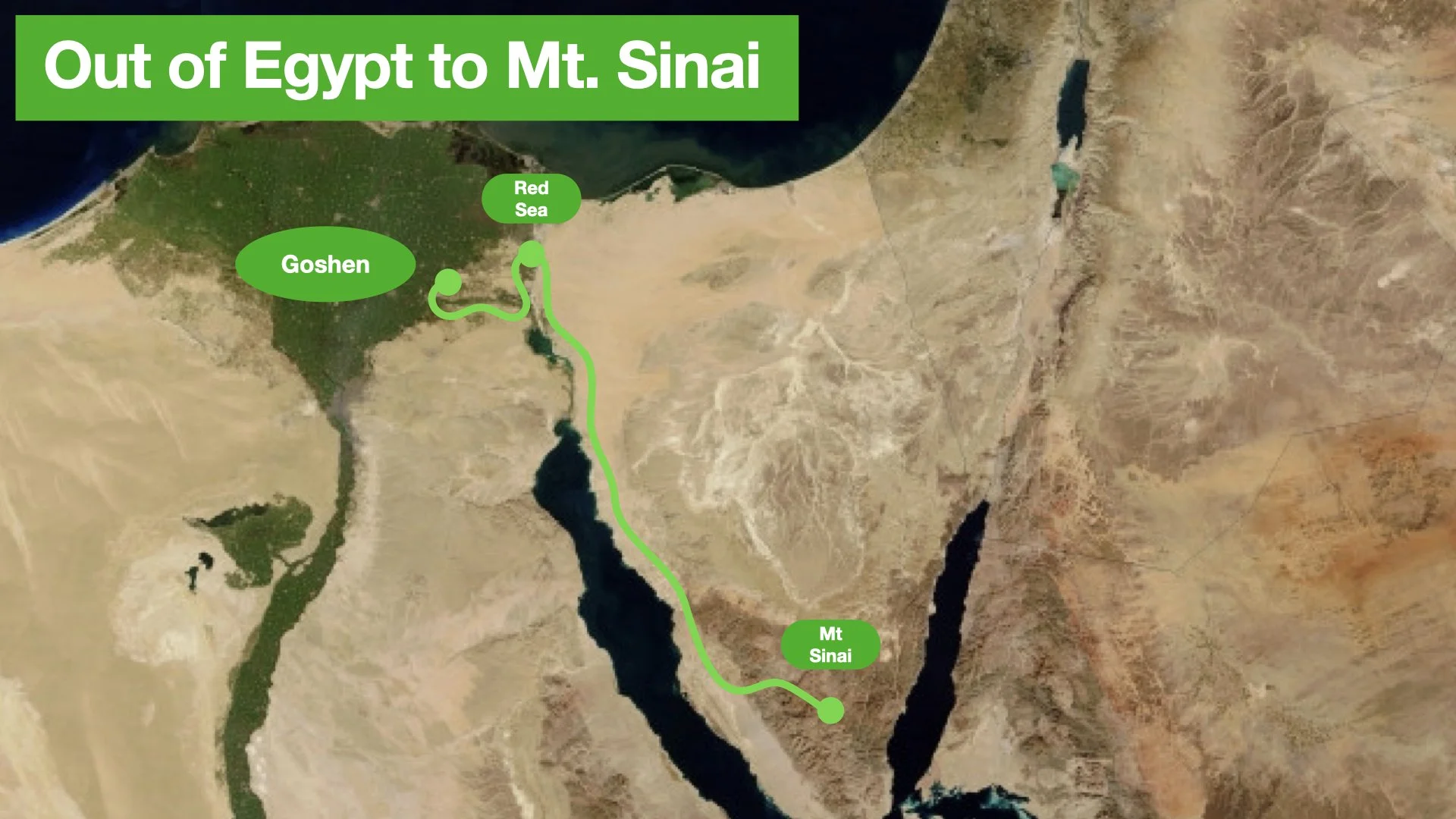
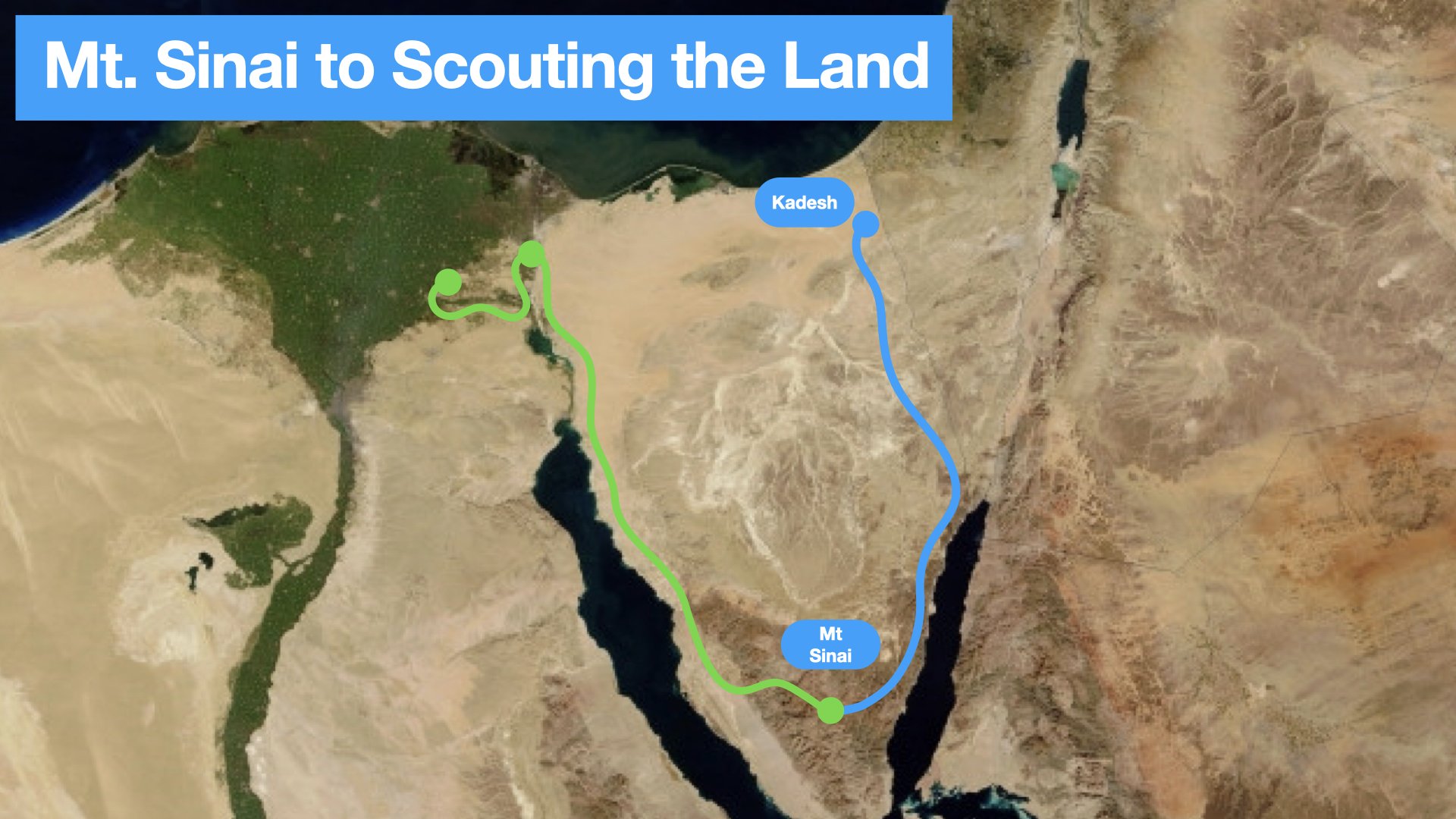
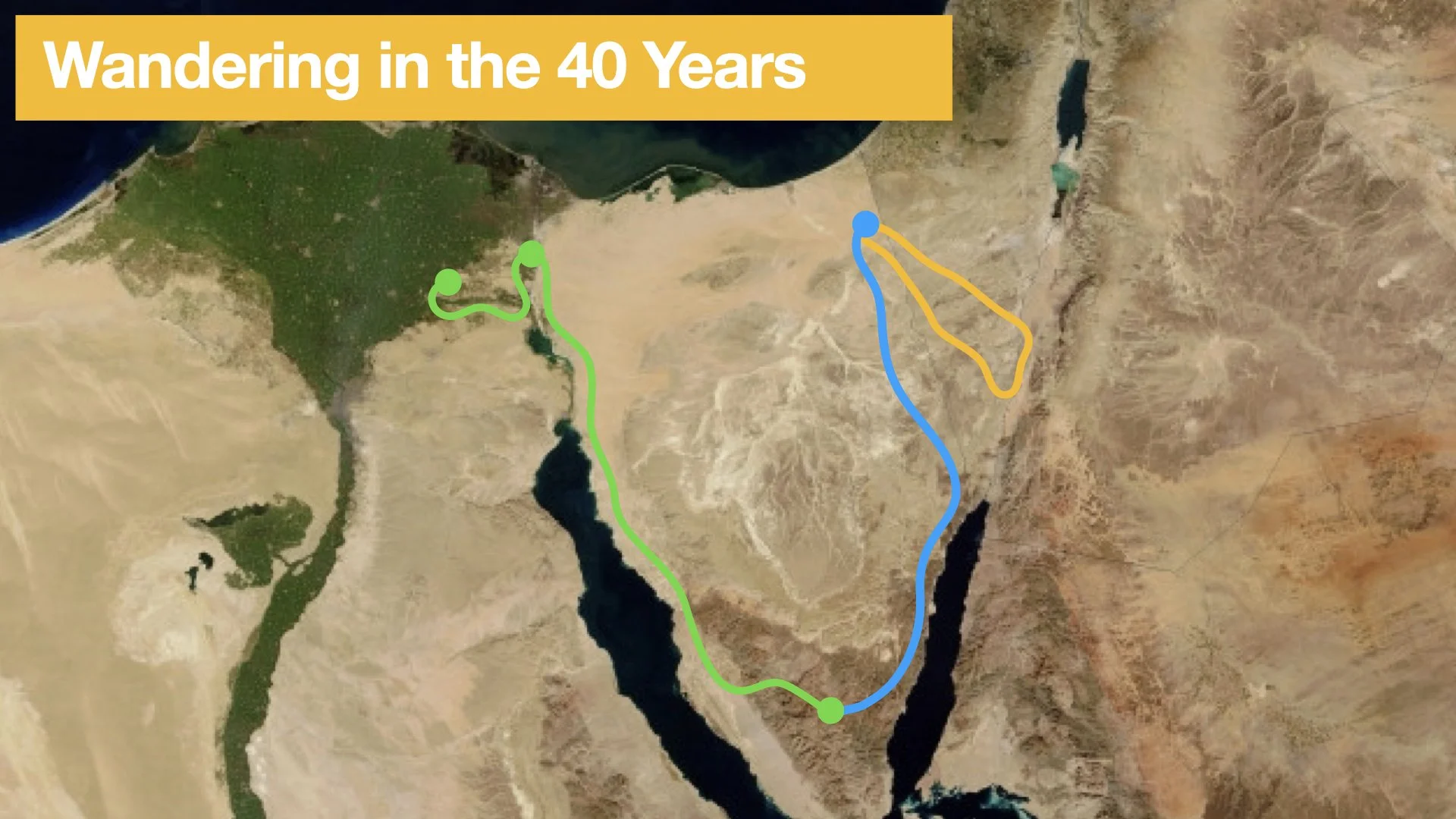
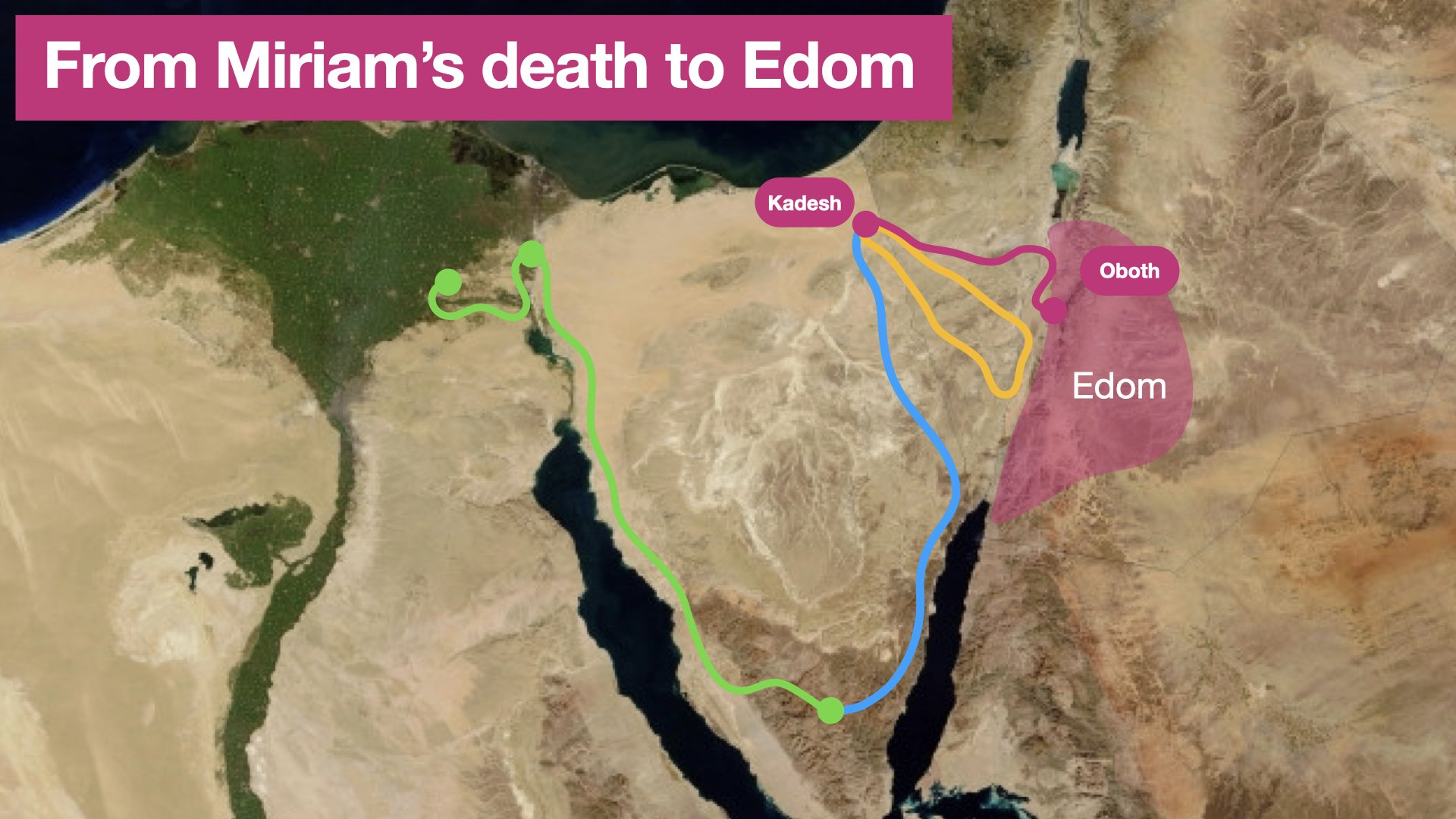
Who Will Bring Water? | Numbers 20:1-13
And the people of Israel, the whole congregation, came into the wilderness of Zin in the first month, and the people stayed in Kadesh. And Miriam died there and was buried there.
Now there was no water for the congregation. And they assembled themselves together against Moses and against Aaron. And the people quarreled with Moses and said, “Would that we had perished when our brothers perished before the Lord! Why have you brought the assembly of the Lord into this wilderness, that we should die here, both we and our cattle? And why have you made us come up out of Egypt to bring us to this evil place? It is no place for grain or figs or vines or pomegranates, and there is no water to drink.” Then Moses and Aaron went from the presence of the assembly to the entrance of the tent of meeting and fell on their faces. And the glory of the Lord appeared to them, and the Lord spoke to Moses, saying, “Take the staff, and assemble the congregation, you and Aaron your brother, and tell the rock before their eyes to yield its water. So you shall bring water out of the rock for them and give drink to the congregation and their cattle.” And Moses took the staff from before the Lord, as he commanded him.
Then Moses and Aaron gathered the assembly together before the rock, and he said to them, “Hear now, you rebels: shall we bring water for you out of this rock?” And Moses lifted up his hand and struck the rock with his staff twice, and water came out abundantly, and the congregation drank, and their livestock. And the Lord said to Moses and Aaron, “Because you did not believe in me, to uphold me as holy in the eyes of the people of Israel, therefore you shall not bring this assembly into the land that I have given them.” These are the waters of Meribah, where the people of Israel quarreled with the Lord, and through them he showed himself holy.
Numbers 20:1-13
The first couple of verses share the passing of Miriam. It’s a little sad she does not get much fanfare, but her passing establishes Moses and Aaron’s frame of mind in the following verses.
The people once again lament the lack of water. They sing a familiar song, “Would that we had perished…” In the NASB, the phrase is translated “If only.” That is such a popular phrase among people that need excuses for their behavior.
“If only I had more money.”
“If only I had better parents.”
“If only the government was better.”
“If only the other guy wasn’t such a jerk.”
The people have lost sight once again of God’s provision. How often do we lose sight and covet what someone else has? The Lord has His reasons for where we are and what we have. There could be any number of reasons why things are the way they are, but our response is to trust God knows what He is doing. After all, the Hebrews wouldn’t be in this situation had they crossed the Jordan to the Promised Land to begin with. I’m sure at some point Moses thought, “You know there’s lots of water in the Jordan!”
If we find ourselves in a dry situation whether our own fault or not, we can trust God to provide.
If this story sounds familiar, but reads differently, it is because you may be thinking of a similar story in Exodus 17 in which God commands Moses to strike a rock on Mt. Horeb. There, he is supposed to strike the rock. Here, God tells Moses to speak to the rock. For many, the question is why the difference, and why does God punish Moses so severely for striking instead of speaking.
The answer is actually in verse 10. Notice, Moses says “shall we bring water for you”. It could be that Moses is saying “shall the Lord and I bring water,” but verse 12 indicates he is referring to himself and Aaron. The Lord tells us the problem. Moses did not trust in the Lord to bring the water. Moses’ first hint that he is actively messing up is that he has to hit the rock twice. The first strike should have indicated he’s doing it wrong.
Moses’ sin is a lack of trust in God’s commandment.
What struck me most in studying this passage this week is how many excuses we could make for Moses and argue God’s punishment was too much. It’s a natural reaction for us because it is easy to see our own sin and lack of trust in this story.
Consider the first verse. Moses’ sister has passed. They obviously had issues in the past (Numbers 12), but that doesn’t change the fact Moses is grieving. Second, as stated, this story has occurred before, but that time Moses was supposed to strike the rock. Perhaps in his grief, he was confused. Thirdly, Moses is fairly annoyed with the people…again. When Moses gathers the people before the rock, he calls them “rebels”—morim. This is not a hearfelt, warm address. He is fed up.
But, regardless Moses’ state of mind, that does not change the fact Moses is to be a prophet to the people speaking God’s truth and message, and representing God before the people. Moses fails to uphold the character of such a role. Yes, he is angry, but that is not an excuse to sin. Perhaps Ephesians 4:26 flashed in your mind just now, but I would like to draw your attention to where Paul got this phrasing.
But know that the Lord has set apart the godly for himself;
the Lord hears when I call to him.
Be angry, and do not sin;
ponder in your own hearts on your beds, and be silent.
Offer right sacrifices,
and put your trust in the Lord.
Psalm 4:3-5
David tells the reader to not sin in their anger. Instead, respond properly by keeping silent, offering right sacrifices, and putting your trust in the Lord. “Silent” is not just a state of ‘not speaking.’ It is a state of rest—rest that comes from knowing the Lord is in charge of the situation.
Moses has lost sight of who is truly in charge. In his grief, in his anger, and maybe even in his confusion, he has lost sight that he is God’s instrument, not God’s replacement. Moses has now let the rebellious people drag him into their unholy attitudes, and so, he will not enter the Promised Land with the next generation.
Anger and grief are valid emotions, but we cannot allow them to control our response to the situation.
Before we move on in the chapter, there is one more thing to notice. God tells Moses to take the staff that was before the Lord to the rock and call forth water. This staff would be the same staff that sprouted fruit in chapter 17. Notice the imagery at work here. The staff that brought forth life and stood before the Lord in the Holy Place of the tabernacle is to stand before the rock and bring water—rushing water the Hebrew language calls “living water.”
The staff bringing living water to the people symbolizes the cross upon which Jesus died and through His sacrifice, He is able to bring us living water. Jesus tells the Samaritan woman in John 4,
Jesus said to her, “Everyone who drinks of this water will be thirsty again, but whoever drinks of the water that I will give him will never be thirsty again. The water that I will give him will become in him a spring of water welling up to eternal life.”
John 4:13-14
The Israelites believed their greatest need was water, much like the Samaritan woman. What the Lord wanted to demonstrate through Moses is exactly what Jesus tells the Samaritan woman:
Our greatest need in life is for the Lord to bring us living water—new life through Christ Jesus.
As we finish reading chapter 20, we will see one more example of distrust.
Can There Be Peace? | Numbers 20:14-26
Moses sent messengers from Kadesh to the king of Edom: “Thus says your brother Israel: You know all the hardship that we have met: how our fathers went down to Egypt, and we lived in Egypt a long time. And the Egyptians dealt harshly with us and our fathers. And when we cried to the Lord, he heard our voice and sent an angel and brought us out of Egypt. And here we are in Kadesh, a city on the edge of your territory. Please let us pass through your land. We will not pass through field or vineyard, or drink water from a well. We will go along the King's Highway. We will not turn aside to the right hand or to the left until we have passed through your territory.” But Edom said to him, “You shall not pass through, lest I come out with the sword against you.” And the people of Israel said to him, “We will go up by the highway, and if we drink of your water, I and my livestock, then I will pay for it. Let me only pass through on foot, nothing more.” But he said, “You shall not pass through.” And Edom came out against them with a large army and with a strong force. Thus Edom refused to give Israel passage through his territory, so Israel turned away from him.
And they journeyed from Kadesh, and the people of Israel, the whole congregation, came to Mount Hor. And the Lord said to Moses and Aaron at Mount Hor, on the border of the land of Edom, “Let Aaron be gathered to his people, for he shall not enter the land that I have given to the people of Israel, because you rebelled against my command at the waters of Meribah. Take Aaron and Eleazar his son and bring them up to Mount Hor. And strip Aaron of his garments and put them on Eleazar his son. And Aaron shall be gathered to his people and shall die there.” Moses did as the Lord commanded. And they went up Mount Hor in the sight of all the congregation. And Moses stripped Aaron of his garments and put them on Eleazar his son. And Aaron died there on the top of the mountain. Then Moses and Eleazar came down from the mountain. And when all the congregation saw that Aaron had perished, all the house of Israel wept for Aaron thirty days.
Numbers 20:14-29
Edom has a long rivalry with Israel throughout the Old Testament and into the New Testament age. Edom is the nation that developed from Esau, Jacob’s brother. You may recall Jacob and Esau were fraternal twins of Isaac and Rebekah. God told Rebekah in a dream that two nations were in her womb, and the older would serve the younger. Esau was born first with Jacob following behind holding onto Esau’s foot. It’s worth noting “Jacob” literally means “grasps the heel” which is a Hebrew idiom for lying. Jacob’s name proves accurate when, later, he tricks his older brother in giving up his birthright for a bowl of stew. Though this transaction shouldn’t be legally binding, with some help from his mother Jacob solidifies his inheritance by tricking his father, Isaac, into giving the double blessing.
The story of these two brothers describes the nations that follow them. Though the brothers part ways on good terms, eventually, they never really reconcile. Jacob is always fearful of Esau because of his guilt. It appears that this tension pervaded through the generations.
The generational tensions between Israel and Edom began with Jacob and Esau.
Now, after hundreds of years, the Israelites request to travel through Edom offering to “pass on foot, nothing more.” They offer to leave any war chariots or other means of travel to avoid any pretense of hostility, nor will they use any part of the land. And should anyone take water or food, they offer to pay for it. Even still, Edom denies passage.
The significance of this conversation is its further indication of Edom’s refusal to take any part in the covenant with God. The Edomites would follow other gods, and though some Edomites apparently worshiped YHWH at times, the nation itself was never devoted to God alone nor sought to be part of the covenant people. This moment could have been a perfect time to rebuild relationships with their long lost cousins and perhaps even ally themselves with God’s people. But the moment passes, and Edom remained a thorn in Israel’s side, along with their false gods, into the Kingdom period.
Now, how does this little historical rabbit trail relate practically to the first part of the chapter?
Again, we cannot allow our emotions to deter us from trusting in God and responding properly in a given situation. Edom’s response to Israel is solely based on the bad blood of generational feuds. They are the Hatfields and McCoys of the Ancient Near East. Edom misses out on who knows what kind of blessing because they refuse to forgive and refuse to move on.
Embracing hostility and un-forgiveness will keep us from opportunities of blessings and peace.
These kinds of feuds are common to humanity. But there is a way past them. In fact, one of the earliest defenders of the faith, Justin Martyr, pointed to rivaling and warring tribes as evidence of the truth of Jesus Christ.
We who hated and destroyed one another, and on account of their different manners would not live16 with men of a different tribe, now, since the coming of Christ, live familiarly with them, and pray for our enemies, and endeavour to persuade those who hate us unjustly to live comformably to the good precepts of Christ, to the end that they may become partakers with us of the same joyful hope of a reward from God the ruler of all.
Justin Martyr, First Apology, 14
The power of the Gospel to transform the person is also the power to transform whole societies. Nations, communities, and families separated by sin can be reunited in peaceful harmony when they surrender to Christ. Jesus is in the business of bringing peace and life, but we cannot have either if we do not trust in Him.
Forgiveness for ourselves and the power to forgive others comes from following Jesus.
The first generation of Israel, Moses, Aaron, and the Edomites all missed entering the Promised Land because they failed to trust in the Lord. So, too, will we miss entering the Promised Land if we fail to trust in the Lord Jesus. Don’t miss your opportunity to join God’s family because of anger, bitterness, rebellion, or anything else.